The Business of Blacksmithing
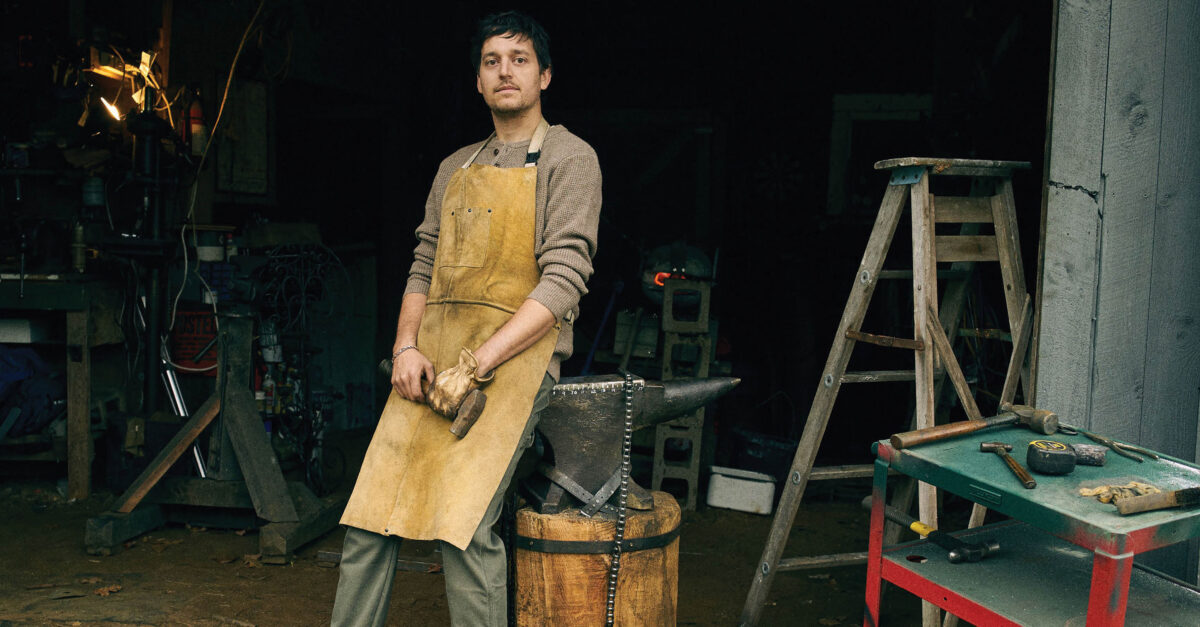
Craftsman Nick Wicks Moreau discusses how he turned a centuries-old craft into a thriving twenty-first-century business, Wicks Forge.
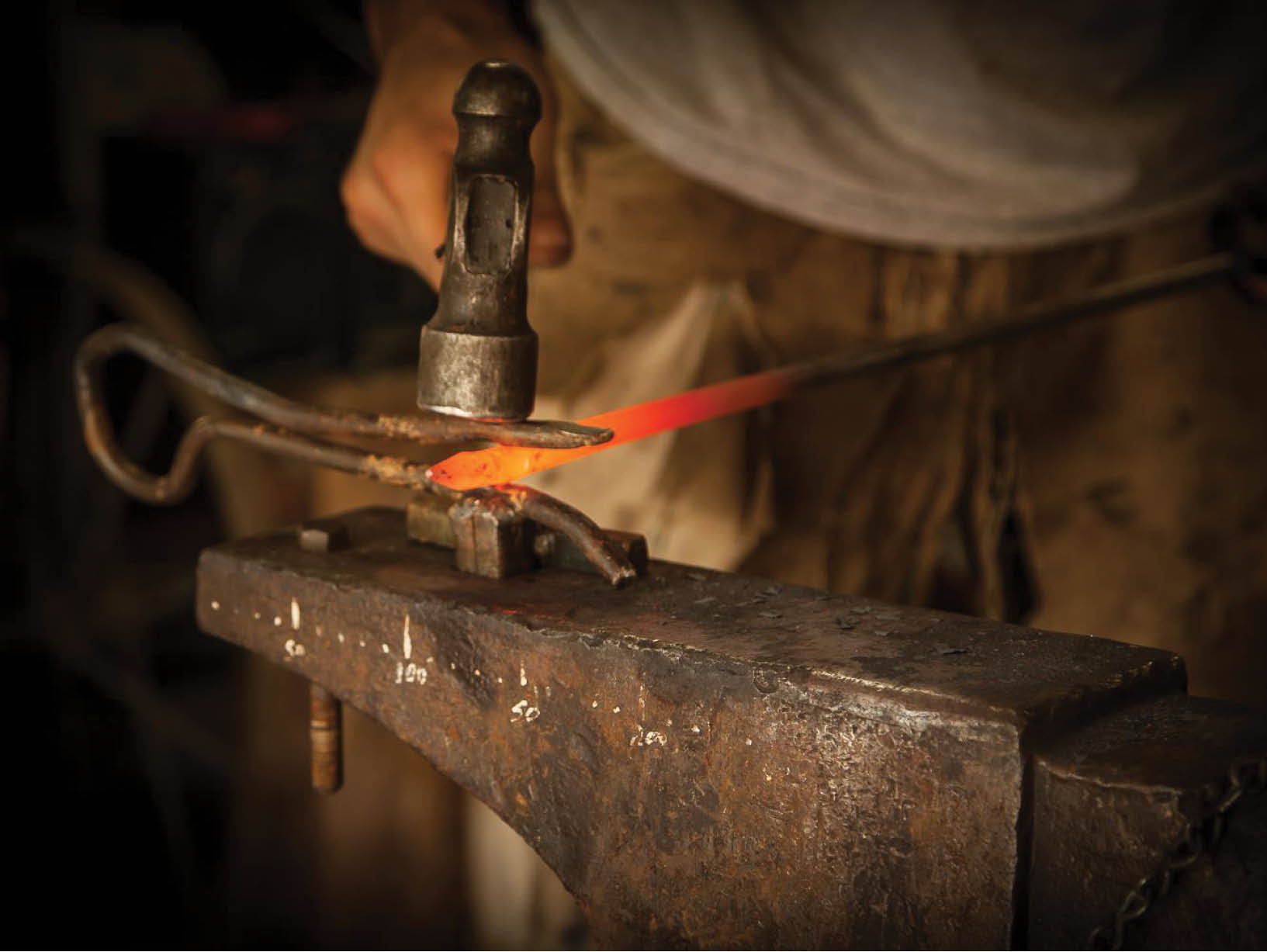
What led you to become a blacksmith?
I’ve always liked working with my hands. When I was younger, I did woodworking with my father, who was a carpenter. Later, I was going to grad school in Scotland for an economics degree but knew I wanted to also have a creative outlet.
I discovered that blacksmithing is still popular in Europe, so I found a blacksmith I wanted to work with named Jim Whitson, who was doing incredible work. I had never done any forging before, so it was great to learn from one of the top blacksmiths in the world about how to run a shop and create pieces.
What happened when you returned home?
I figured it was a fun experience but that I would get a “real” job. However, my grandfather, great-grandfather, and great-great-grandfather had all been metal workers. I started cleaning out my grandfather’s garage, and I found his father’s anvil and tools. I knew that if I built a forge, I could be a blacksmith. I used most of my family’s tools and started working out of that garage.
How did it become a business?
I made things to sell, but the business wasn’t profitable. I was broke, saddled with student debt, and had to do something, so I got that “real” job working in New York City. Right after I did, my business started growing. I was working in New York during the week and then going to Connecticut on weekends to fulfill orders.
My big break came when I was featured in Popular Mechanics. Suddenly, I was getting publicity and people were connecting with what I was doing. A few years after that article ran, I relocated to Maine. That’s when the business started really expanding because my shop was in my home, which helped with overhead costs. For the first three or four years, all the money I made went right back into buying tools and equipment, and I hired my first-ever staff.
How did COVID-19 impact your business?
COVID hit right after I started hiring in 2020, and this was now my only job—talk about stressful. Plus, about 80 percent of our business for the year was slated to be in-person sales at craft fairs, and that got wiped out.
Up to then, we had sold items on Etsy but not much on our website; it was just supplementary income that I never really gave much attention to. Fortunately, a college friend who had worked in the startup world took a crack at redoing my website to create an online business model, which helped us quickly transition to doing online sales.
Despite losing all of those in-person sales, pivoting not only helped cover the losses from COVID but also springboarded us to growth. Our revenue doubled the next few years.
Do you prefer to craft a few, exclusive products for larger profits or many products for the masses?
I don’t come from a wealthy background, so I’ve always felt that everyone should have access to nice handmade things. In fact, as we’re talking, I’m using a mug that a friend of mine made; using it daily brings joy to my life. So our approach has always been “How can we make things that are handmade, affordable, and accessible?” In addition, as the business has grown, I’ve been delegating tasks so that designs are not just dependent on me—other people can come in and contribute.
We now have a product line that we can produce at a relatively high volume. We’re still creating each piece one at a time, but we can make dozens or hundreds rather than five, so we can scale up production. And working very efficiently and in production runs brings costs down.
We’re positioned within the handmade market. However, I think our products, from a design perspective, are equally as good, if not slightly better than our competitors’ but at a price point that’s often lower. That makes it easier for people who want to have a handmade aesthetic to say yes to buying our product rather than, say, something similar at Pier 1 Imports.
Have you had any business failures? If so, what did you learn from them?
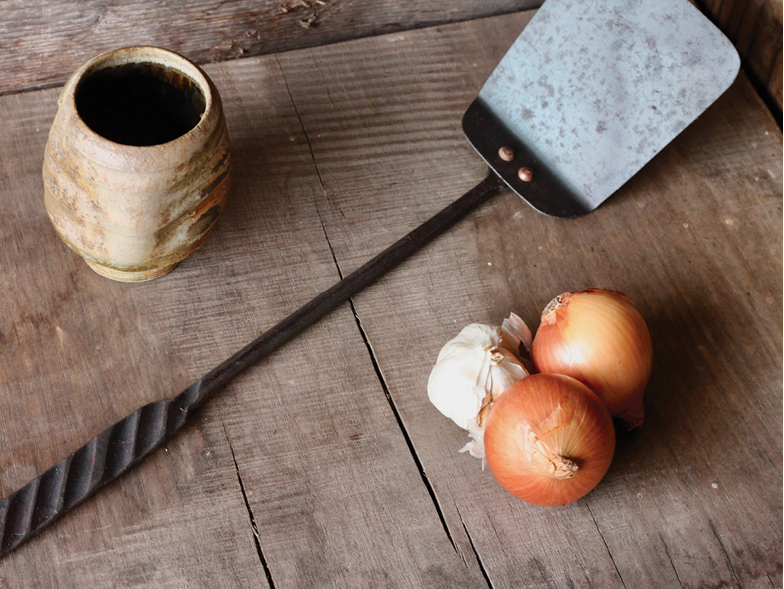
Because of our online model, we know how many sales we do each week, and that covers our general operating costs. But there’s a process for the products. For instance, 2021 was the first year we started offering barbecue tools such as spatulas and pokers. I had a design that I was excited about, and it did well, but we were always sold out because we couldn’t make them efficiently—they were time-intensive. We all got burned out, and the pieces weren’t very profitable.
That was a big lesson: it’s not just about making something that looks cool. From step one, as I’m designing a piece, I must think about how repeatable the process is: can we make something that looks consistent regardless of who’s making it? And can we make it efficiently at a high volume?
I had to throw away those original designs. But in 2022, we came up with a new barbecue tool line that’s much more cost-effective to make at a larger volume. It’s a design we’re still very proud of, and it’s more profitable and sustainable on our end.
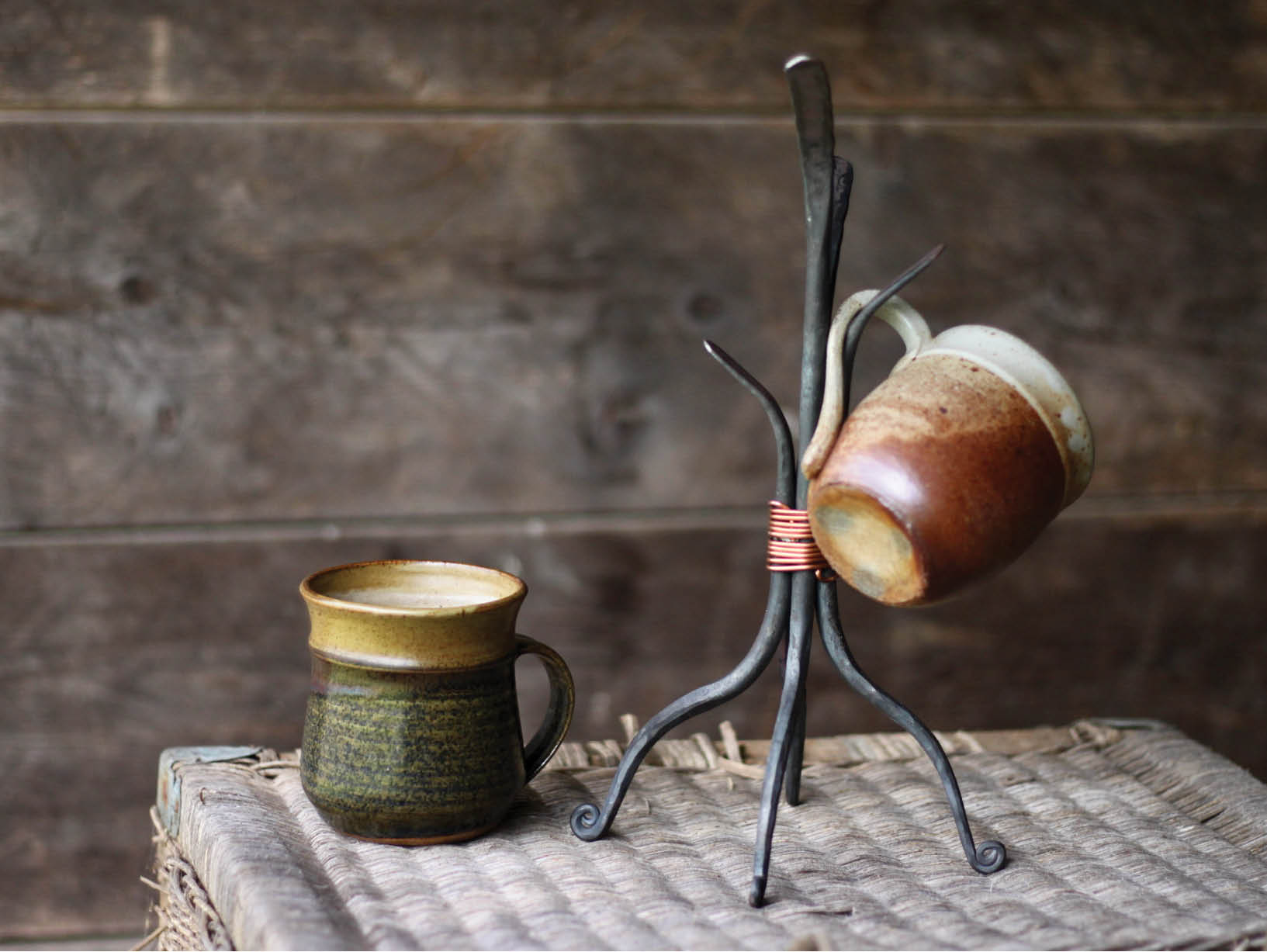
Is profitability more difficult with smaller products?
I think there’s something to that. On the lower end of the price market, we’re competing against everyone who has a backyard forge and has learned how to make a bottle opener. The competition drives the price lower, so I don’t want to spend our time making fancy bottle openers because you can get a bottle opener anywhere. So for our lower-priced items, we focus on things that are well made yet that we can do at a high volume and offer them at competitive prices while being profitable.
I’m always thinking about the customer. I think the trap sometimes for craftsmen is we get overexcited about the process. But you must separate what you think is interesting from what a customer does. Our few higher-end pieces are on the lower end of profitability because there’s no way to automate their production—we must bend each piece one at a time, we can’t do high volume, and there’s a production run of ten.
What does handcraftsmanship mean to you and your customers?
A blacksmith used to be a fixture of the community by necessity. Hardware stores didn’t exist, so you got your nails, tools, and garden equipment from a blacksmith shop. Today there are other options, so a town doesn’t need a blacksmith anymore. But there is still a need for the handmade aesthetic. It’s awesome to use something that’s handmade versus something that you can’t develop a personal relationship with.
That’s something that’s missing to a large extent today. People don’t have a direct connection to their food or their material objects, and, in building this business, I want us to bring back that mindset of the relationship between where things come from and the end user. There’s value in that.
I find that people are always excited to meet a blacksmith, which shows that there’s an interest in these historical trades. It shouldn’t be that big a deal, though. I’m extremely proud of our small business and how we’ve been able to grow. But from a business and market perspective, I want us to be a model for producing inexpensive handmade pieces—and not just survive as a business but thrive. I hope that, over time, we’ll be a good example of how not just blacksmithing but handmade products overall can be affordable and sustainable and not such an outlier.
Where do you see handcrafted-product businesses like blacksmithing heading?
I’d like to see this upward trend for quality handmade products continue and small businesses continue to innovate ways to bring affordability into the handmade market.
And I’d to see blacksmithing become relatively normal again; someone shouldn’t have to go on a crazy Scottish journey to get into this profession. In fact, one of the things I’m proud of is opening our business to let folks immediately make a wage doing blacksmithing. They learn a foundational skillset while contributing to this business, and they can use it here or at another shop or to start their own business. I’ve seen several young people come through the shop and continue their journeys as craftspeople and individuals. It’s been a cool small-business success story in that sense.
For more info, visit wicksforge.com